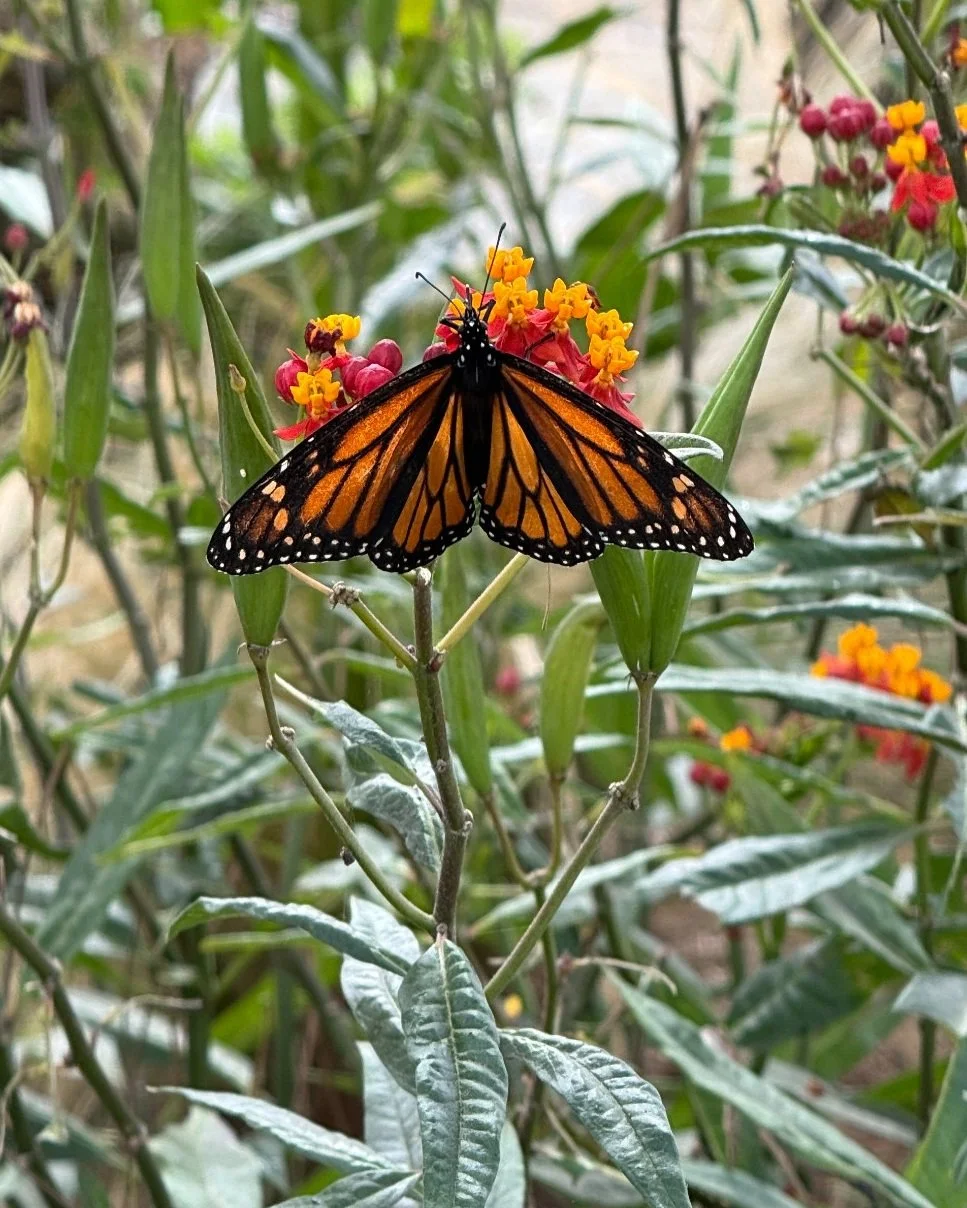
A monarch butterfly I photographed in California—a reminder that growth sometimes requires transformation, not simply getting bigger.
At a recent retreat in California, I spotted a monarch butterfly among the flowers and stopped to take a photo. There's something remarkable about a creature that changes so completely over the course of its life.
A caterpillar doesn't become a butterfly simply by growing bigger. At some point, the very structure that supported its growth must change.
Organizations aren't so different.
In the early days, much of what makes a business successful comes from its ability to move quickly, adapt, and rely on a relatively small group of people who know how to get things done. Decisions happen through conversations. Responsibilities overlap. People figure things out together.
And for a while, it works remarkably well.
Then the organization grows. More people, more customers, more complexity. Decisions take longer. Communication becomes harder. Leaders who once had a hand in everything become bottlenecks. What used to feel nimble starts to feel chaotic.
The temptation is to work harder, hire more people, or add another process. But often, these challenges aren't signs that people are doing something wrong. They're signs that the organization has outgrown some of the ways it operates.
Growth doesn't just require doing more. Sometimes it requires becoming something different.
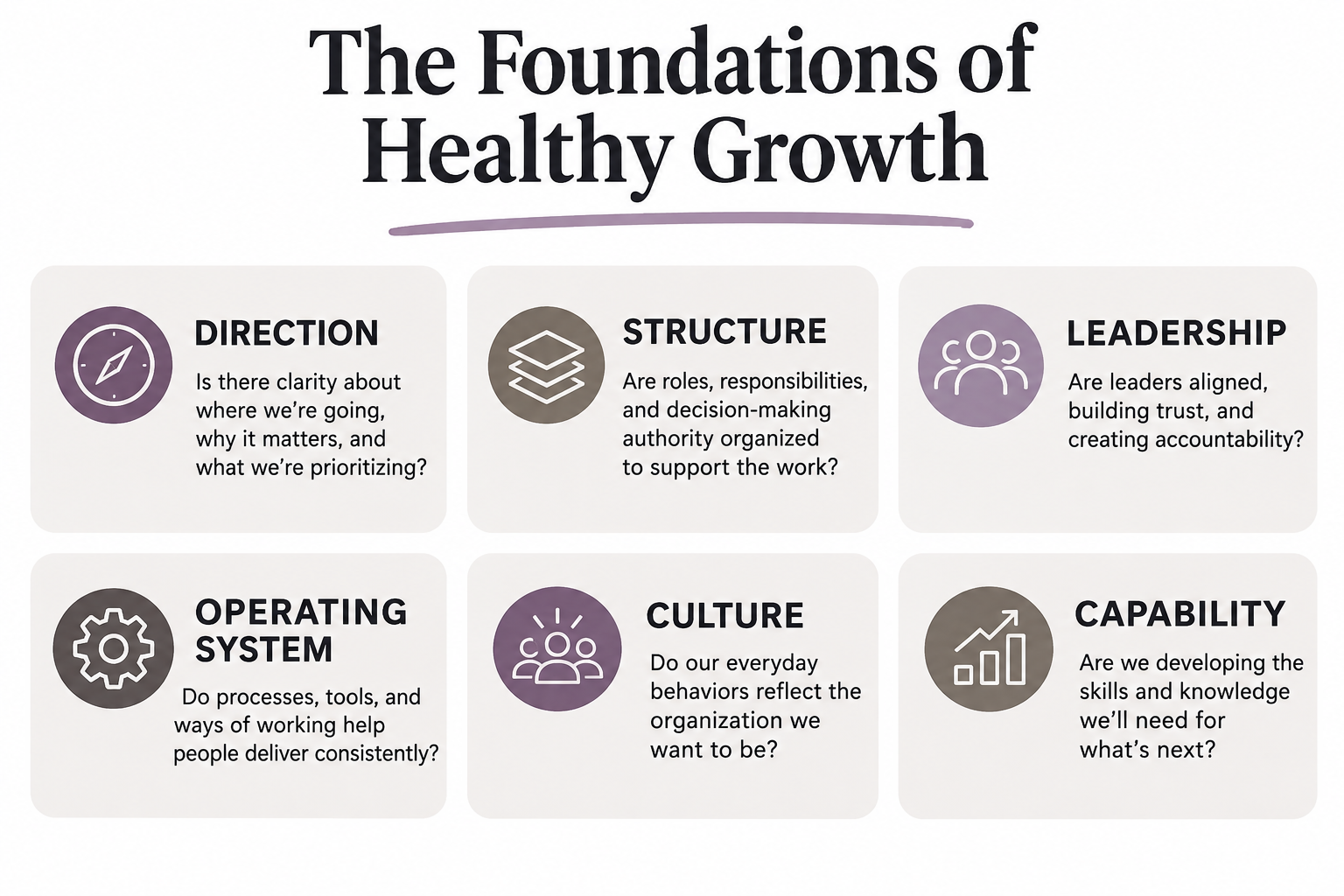
Throughout my career, I've seen organizations navigate a transition with varying degrees of success. One thing has become clear: sustainable growth depends on more than a compelling vision, a strong product, or talented people. It requires an organization designed to support where it's going.
In my work, I look at six interconnected foundations:
Direction: Is there clarity about where we're going, why it matters, and what we're prioritizing?
Structure: Are roles, responsibilities, and decision-making authority organized to support the work?
Leadership: Are leaders aligned, building trust, and creating accountability?
Operating System: Do processes, tools, and ways of working help people deliver consistently?
Culture: Do our everyday behaviors reflect the organization we want to be?
Capability: Are we developing the skills and knowledge we'll need for what's next?
Each foundation matters, but none operates independently. An organization can have a clear direction and talented leaders, yet struggle because its structure creates confusion. It can have effective processes but lack the capabilities to execute them. And even a strong culture can become difficult to sustain when the organization grows beyond the relationships that once held it together.
The challenge isn't necessarily knowing that something needs to change. It's understanding where to focus and how to evolve without losing the strengths that made the organization successful in the first place.
Growing Into What's Next
The butterfly offers a useful reminder. Transformation isn't simply about leaving the past behind. It's about developing what is needed for the next stage.
For organizations, that means preserving the entrepreneurial spirit, relationships, and strengths that fueled early success while being willing to reconsider the structures, practices, and expectations that may no longer serve them.
As you think about your organization's next chapter, consider this:
Where are we asking people to work harder when what we really need is a different way of working?
Over the next several months, I'll explore each of the six foundations of healthy growth, sharing observations and questions to help leaders recognize where their organizations may need to evolve.
If your organization is experiencing growing pains, I'd welcome a conversation about what's changing and what might help.
Because healthy growth isn't just about getting bigger. It's about becoming better equipped for what's next.
Enjoyed this perspective?
Each month, I share observations, practical ideas, and lessons learned about leadership, organizational growth, culture, and change.
Subscribe to receive the next one in your inbox.
And if something here resonates with a challenge you're navigating, I'd welcome a conversation.